Wisconsin Grant–Private, Nonprofit: A Needed Boost for Student Aid
On July 3, the Legislature passed, and Governor Tony Evers signed, Wisconsin’s 2025–2027 biennial state budget. Following months of sustained advocacy by the Wisconsin Association of Independent Colleges and Universities (WAICU), its member institutions, and stakeholders, the budget includes a $5.86 million increase in Wisconsin Grant funding for students attending private, nonprofit institutions—a 10.3 percent rise over the previous biennium. This marks the largest percentage increase in over ten years.
While short of the requested increase WAICU advocated for, this funding represents a meaningful step toward ensuring that financial aid keeps pace with student need. During budget deliberations, WAICU emphasized that Wisconsin’s private colleges graduate 23 percent of all bachelor’s degrees and 33 percent of advanced degrees statewide—all without direct taxpayer support. Wisconsin Grants remain the primary need-based financial aid program for undergraduate students attending private, nonprofit colleges and universities in the state.
Unfortunately, Wisconsin’s investment in student aid has not kept pace with student needs. Even with the increase provided by the Legislature, the state continues to lag its Midwestern counterparts in the amount of aid provided to students and will not move us up in the Midwest rankings.

The state appropriation for the Wisconsin Grant Program to students at Wisconsin’s private colleges accounts for less than 2 percent of the total state investment in higher education. However, this investment yields a significant return for the State of Wisconsin in terms of contributions to the workforce.
Addressing Workforce Shortages
Like most Midwestern states, Wisconsin is experiencing workforce shortages across nearly every occupation. The state currently lacks approximately 12,500 college-educated workers annually to fill job openings requiring postsecondary degrees. As college enrollment remains stagnant, this gap is expected to widen significantly without immediate action.
Additionally, Wisconsin’s higher education participation rate is well below the national average and most surrounding states. In the 2022–2023 academic year, fewer than 52 percent of Wisconsin high school graduates enrolled directly in college—a decline of approximately 10 percentage points over six years.
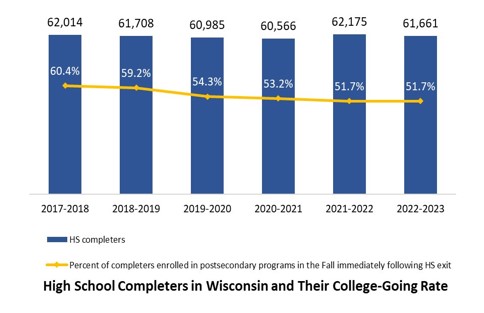
There is also a considerably wide gap, over 25 percentage points, in the college going rate among economically advantaged and disadvantaged students as evidenced by the chart below.

Looking Ahead
Given the state’s critical workforce shortages, it is more important than ever to invest in students seeking to earn degrees and contribute to Wisconsin’s economy. WAICU will continue working with elected officials to increase the state’s attainment rate and align educational policies to support these efforts. We look forward to continued collaboration with the Legislature and Governor to advocate for additional investments in programs like the Wisconsin Grant, which support low-income students pursuing postsecondary education.